.png?width=298&height=78&name=sierra-logo%20(1).png)
![SIERRA-Logo [Navy]](https://www.sierraventures.com/hubfs/SIERRA-Logo%20%5BNavy%5D.svg)


Written by
Anne Gherini
Published on
March 18, 2026
Share


Summary

In today’s market, getting into the right companies matters more than optimizing ownership—selection is the real edge.
AI has collapsed the timeline to build, but not the difficulty to win—speed is table stakes, differentiation comes from insight and execution.
The early-stage market is noisier than ever, with founders and VCs reinforcing extremes—those who stay disciplined will outperform.
Share


The New Rules of Early-Stage Venture in the AI Era
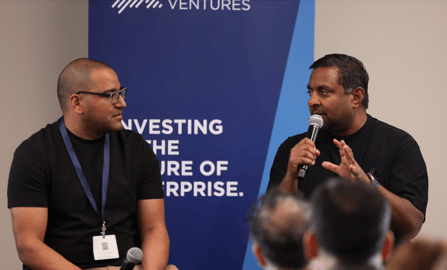
At our recent Pre-Seed VC Summit, Sierra Ventures’ Shomik Ghosh sat down with Semil Shah, Founder and GP at Haystack, for a candid conversation on what’s actually changing in venture right now, and what isn’t.
The backdrop is familiar: more capital in the market, more competition for founders, and a growing presence of multistage funds moving earlier in the process. But underneath that, the way early-stage investing works is shifting in quieter ways that matter more.
Selection matters more than ownership
There’s a lot of focus today on ownership—how much to buy, how much to reserve, how concentrated a fund should be. But at the earliest stages, those mechanics can be misleading.
You don’t control outcomes as a pre-seed or seed investor. You’re not driving the company day to day. What you actually control is who you back and how consistently you apply your judgment.
You can own 10% of a great company or 10% of something that never works. The difference is selection.
For founders, this shows up in who you choose to bring onto the cap table early. The best early partners aren’t just optimizing for stake. They’re optimizing for getting into the right companies and staying aligned over time.
AI is resetting expectations for speed and scale
AI is changing how quickly companies can build and how much a small team can accomplish. The best founders are operating with leverage that didn’t exist a few years ago.
That’s raising the bar. What used to feel like strong early traction is starting to look average. There’s an emerging split between companies that are clearly “native AI” and those that aren’t, and they’re being evaluated differently.
If you position as an AI company, the expectation is that you move fast and show it early. If you don’t, you need to be equally clear about what you are and why it matters.
This isn’t just a trend. It’s a shift in what “good” looks like.
The market is crowded, but still inefficient
It’s easy to assume that the best companies are all getting picked up immediately by large funds or funneled through accelerators. In practice, that’s not how it works.
There are more founders building than ever before, and more capital chasing them. That creates noise, but it also creates gaps.
Strong teams are still raising smaller rounds. Some by design, others because they didn’t fit the consensus narrative at the time. Those companies often don’t look obvious on day one.
The opportunity at the earliest stages hasn’t disappeared. It just requires more conviction.
Why smaller funds still win
As fund sizes grow, the pressure to fit a specific model increases. Larger funds need ownership targets, check sizes, and portfolio construction to line up in a certain way.
Smaller funds have more room to move. They can collaborate more easily, make decisions faster, and invest without forcing every opportunity into a rigid structure.
That flexibility shows up in how they work with founders. It’s often less about leading a round and more about building an early relationship and staying close as the company evolves.
For founders, that can matter more than who writes the biggest check.
The echo chamber on both sides
One of the more striking dynamics right now is how much both sides of the market are reinforcing each other.
Founders are telling other founders to raise bigger rounds, move faster, and skip steps. Investors are telling other investors to increase fund sizes, pile into winners, and not miss out.
Over time, that feedback loop pushes behavior in the same direction. It can create momentum, but it can also blur judgment.
You start to see patterns repeat not because they’re right, but because they’re common.
You can’t control outcomes, only inputs
In a market that feels unpredictable, the most grounded approach is focusing on what you can actually control.
For investors, that’s who you spend time with, what you say yes to, how you price risk, and how you build your portfolio. For founders, it’s how you build, how quickly you iterate, and how clearly you understand your customer.
The outcomes will vary. The inputs compound.
What stands out in founders
Even with all the changes in venture, the core question hasn’t moved much: why this founder, on this problem, right now?
There isn’t a simple checklist. What tends to matter more is how deeply a founder understands what they’re building and how they got there.
The strongest founders don’t just describe a problem. They’ve developed a point of view that feels earned. In conversation, you can tell whether they’re repeating something they’ve heard or whether they’re seeing something others haven’t.
That difference is usually clearer over time than in a single pitch. It comes out in how they think, how they respond, and how much ground they’ve already covered on their own.
Where things are heading
There’s a lot of uncertainty in the market right now, and that’s unlikely to change anytime soon. AI is accelerating timelines, capital is moving quickly, and new patterns are forming in real time.
What’s holding steady is the foundation.
Getting into the right companies early still matters more than optimizing around the edges. Speed and execution are becoming more important, not less. Relationships still drive access. And ultimately, the advantage comes from making better decisions before they’re obvious.
For founders, that means building with clarity in a market that rewards noise.
For investors, it means staying disciplined in a market that rewards momentum.
Written By