At Sierra Ventures, conversations with enterprise technology leaders are one way we stay close to how AI is actually deployed within large organizations, beyond the demos and headlines.
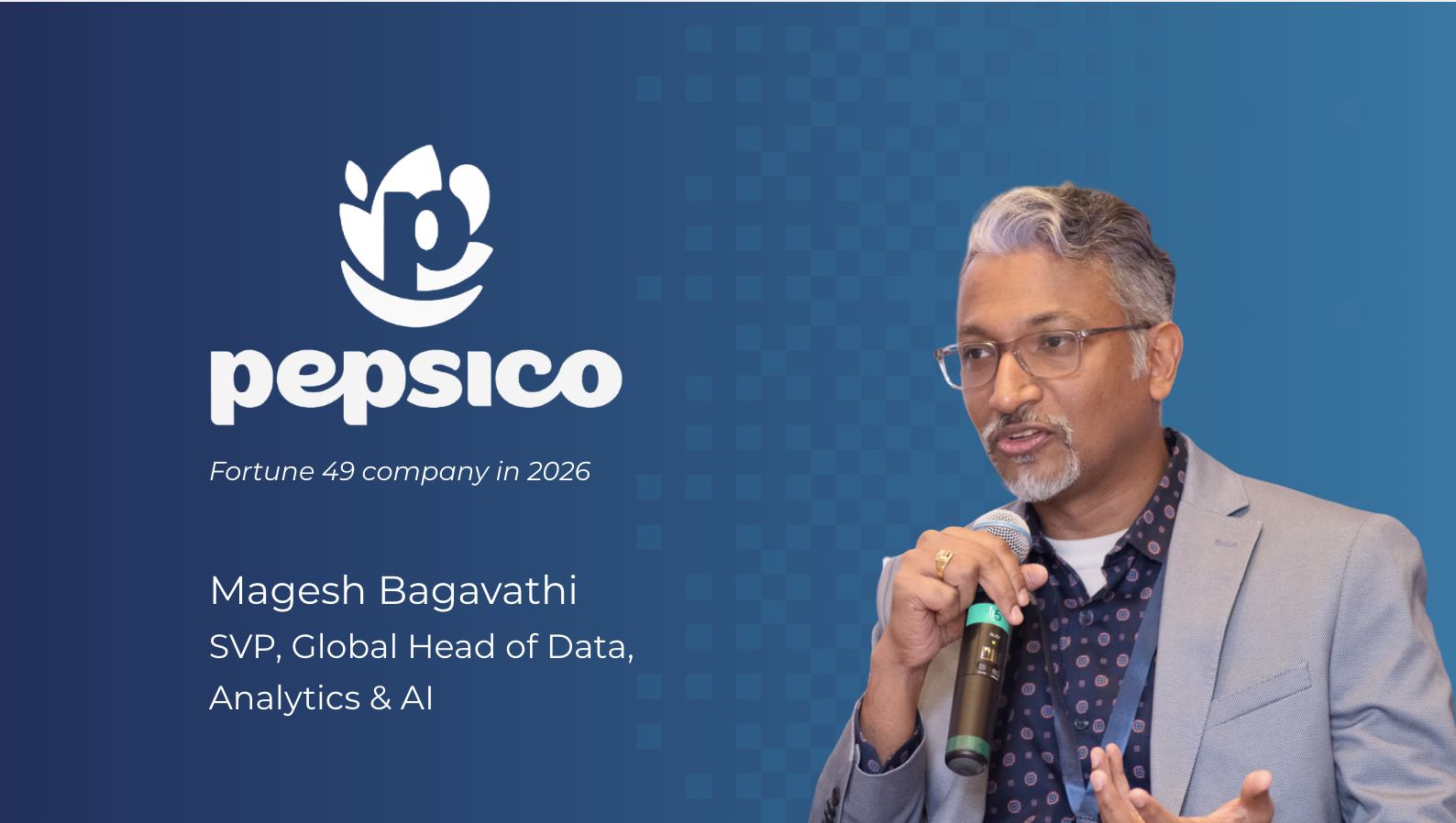
Mark Fernandes recently sat down with Magesh Bagavathi, SVP, Global Head of Data, Analytics & AI at PepsiCo, to discuss what AI adoption looks like inside the enterprise, where AI is already being applied across procurement, operations, and enterprise workflows that support a business serving products to 1.4 billion consumers daily.
AI Adoption Starts With Infrastructure
One of the clearest themes from the conversation was that enterprise AI success starts long before a model is deployed. PepsiCo spent years modernizing its infrastructure before the current AI wave accelerated. According to Magesh, roughly 70% of PepsiCo’s environments are already on the cloud, while 80% of its data estate has been cleansed, harmonized, and prepared for AI consumption.
As Magesh put it, “You still need to do the basics right because you’re running a business. You’re not running AI, you’re running a business.”
That foundation is now giving the company a significant advantage as AI adoption scales internally. It also reflects a broader pattern we continue hearing across Sierra Ventures’ enterprise network: companies without strong data foundations are struggling to move AI initiatives beyond experimentation.
The Bigger Shift Is Organizational
While much of the AI conversation focuses on models and tooling, Magesh emphasized that the harder challenge is organizational change. Traditional enterprises are still structured around siloed workflows and functions, while agentic systems operate horizontally across them.
“An agent doesn’t think that way. An agent thinks completely horizontally, without these boundaries,” he said while describing how AI systems are beginning to reshape workflows across large organizations.
As PepsiCo deploys AI across areas like procurement and operations, the company is already seeing how workflows, roles, and decision-making structures are beginning to change alongside the technology. In many cases, AI is not just improving an existing process. It is reshaping how that process operates altogether.
Technology Is Moving Faster Than Enterprises
Another important point from the discussion was the pace of change itself. Enterprises are trying to balance pressure to adopt AI rapidly with the reality that governance, security, and operational controls are still evolving.
PepsiCo has invested heavily in centralized AI platforms, governance layers, and guardrails to manage risks around hallucinations, data exposure, and agent behavior.
As Magesh put it: “Do we know enough? Are we being thoughtful enough? Are we going to make or break the company as we do this?”
This is something we consistently hear from CIOs, engineering leaders, and AI teams across our network. The companies moving fastest are often the ones that invested early in the infrastructure and governance required to support AI at scale.
What Founders Should Pay Attention To
Toward the end of the conversation, Magesh shared advice for startups building into the enterprise AI market. The best founders, in his view, stay extremely close to customers, iterate quickly, and learn directly from production environments.
“The rules haven’t changed. It’s still: make your customer successful.”
Watch the video:
.png?width=298&height=78&name=sierra-logo%20(1).png)
![SIERRA-Logo [Navy]](https://www.sierraventures.com/hubfs/SIERRA-Logo%20%5BNavy%5D.svg)




%20(1).jpeg)