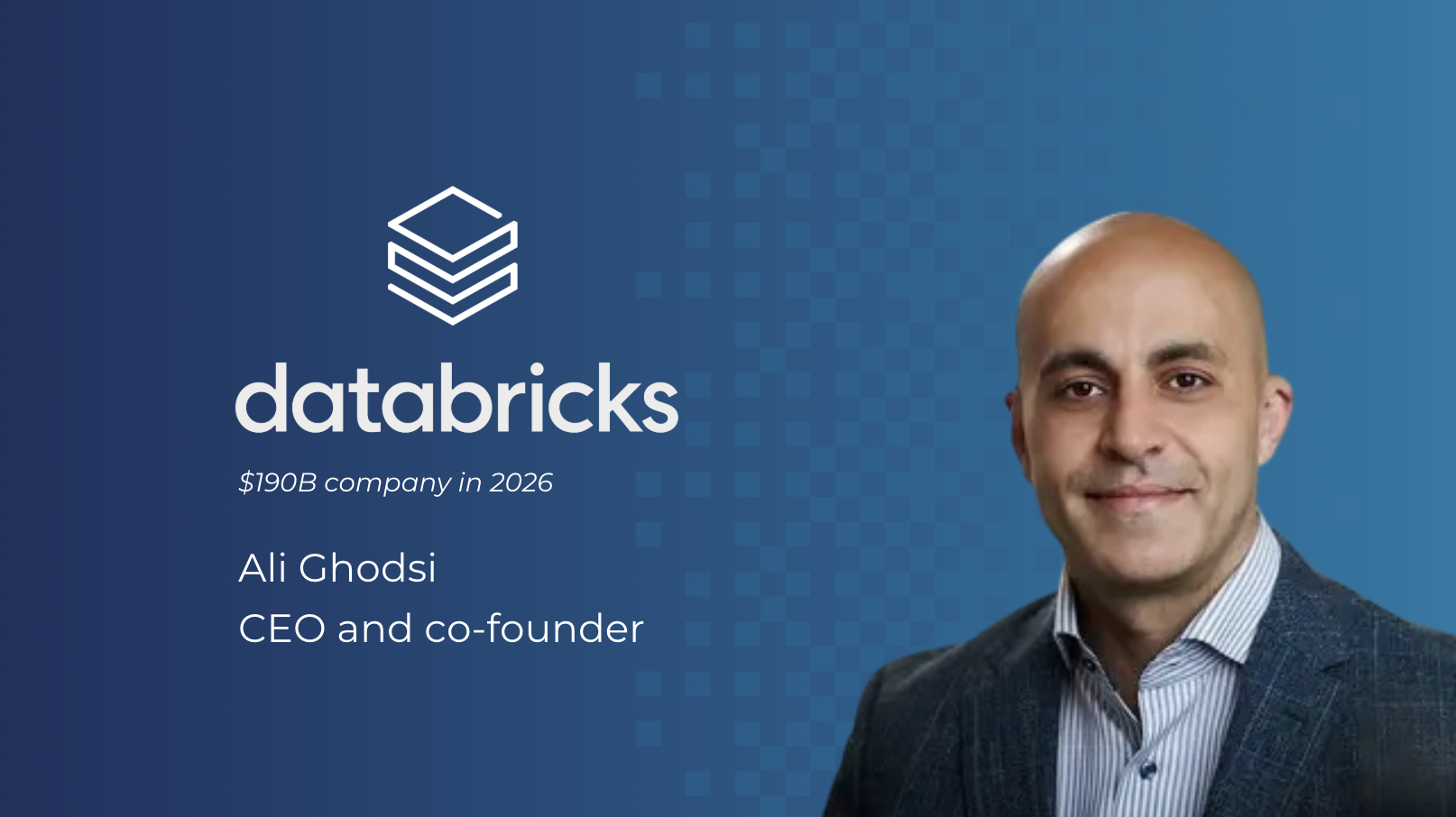
At Sierra Ventures' 18th Annual CXO Summit, Databricks CEO Ali Ghodsi joined Sierra Ventures Managing Partner Mark Fernandes for a Chatham House Rule conversation about the evolution of AI, enterprise adoption, and the lessons he has learned building one of the most important data and AI companies of the last decade.
Ghodsi reflected on his time as a researcher at UC Berkeley in 2008 and 2009, where he focused on democratizing and open-sourcing AI and machine learning technologies. After publishing research papers, he realized that building a company would be the best way to bring those innovations into users' hands.
One of the biggest lessons Ghodsi learned early on was that enterprises have very different requirements than researchers.
"Enterprises have compliance, security, and a lot of legacy software sitting around," he explained. Success in enterprise AI requires governance, security, and architectures that work with existing systems.
When asked what advice he would give CXOs beginning their AI journeys, Ghodsi was direct: "If you want to do AI, you have to embrace unstructured data sources."
He discussed the Lakehouse architecture and its ability to support both structured and unstructured data, something traditional data warehouses were not designed to do. As AI adoption accelerates, Ghodsi believes organizations will need platforms capable of bringing together all forms of enterprise data.
The conversation also touched on common misconceptions about AI, the controversies surrounding its adoption, and where the technology is headed next.
In his closing remarks, Ghodsi emphasized the importance of culture, encouraging leaders to model the behaviors they want to see in their organizations and to embrace risk and failure as necessary parts of innovation.
.png?width=298&height=78&name=sierra-logo%20(1).png)
![SIERRA-Logo [Navy]](https://www.sierraventures.com/hubfs/SIERRA-Logo%20%5BNavy%5D.svg)