.png?width=298&height=78&name=sierra-logo%20(1).png)
![SIERRA-Logo [Navy]](https://www.sierraventures.com/hubfs/SIERRA-Logo%20%5BNavy%5D.svg)


 Back
Back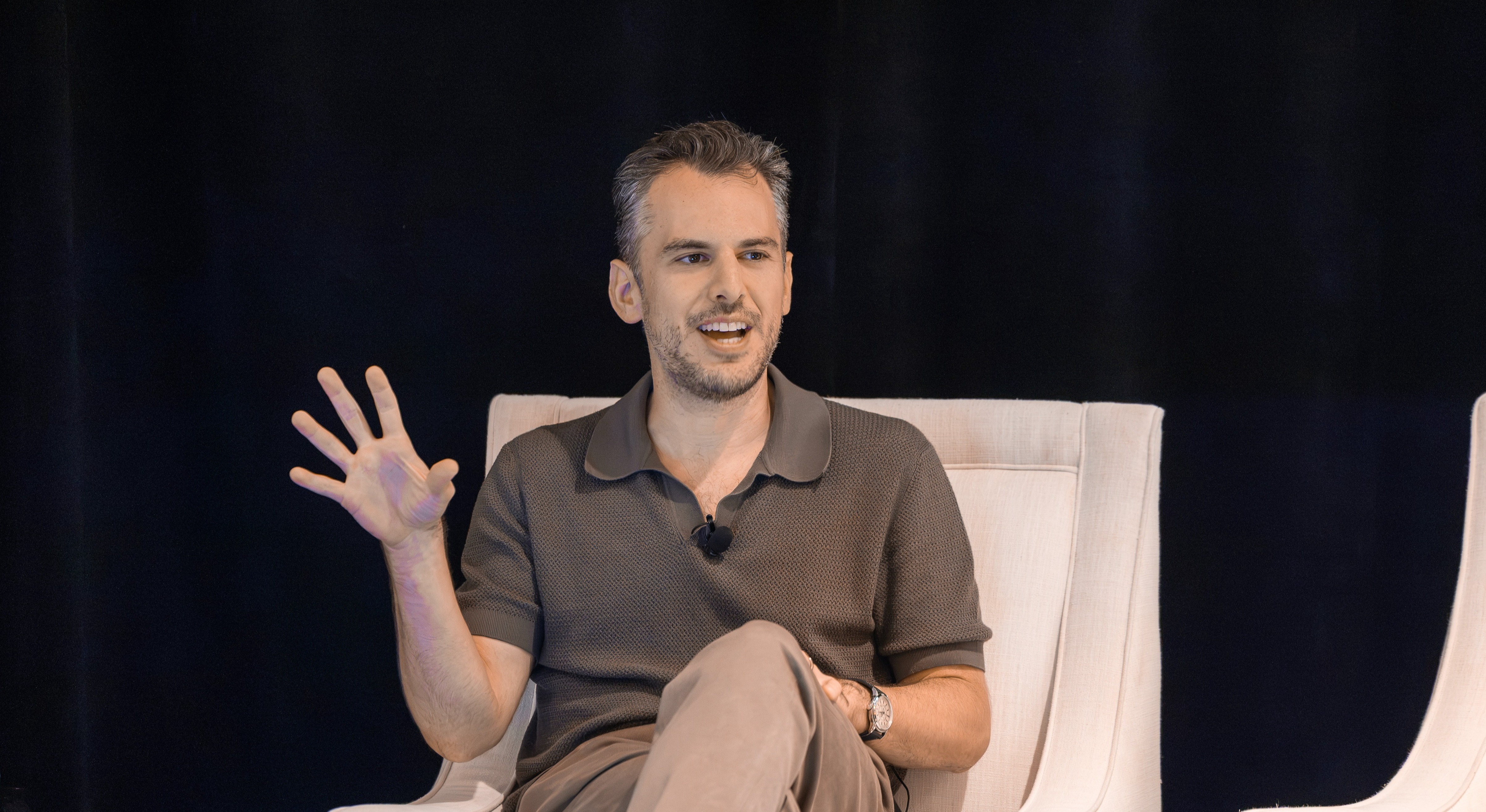
Written by
Anne Gherini
Published on
September 28, 2026
Share


Mike Krieger has been in the room for more than one major shift in tech. He co-founded Instagram, one of the most popular consumer products ever built, and stayed on as CTO after the Facebook acquisition, helping it grow past one billion users. In 2024, he joined Anthropic as Chief Product Officer, leading product at one of the most influential companies in AI during one of the most pivotal stretches our industry has seen.
Today he co-leads Anthropic Labs, the incubator behind Claude Code and the Model Context Protocol, where the team builds for where the models are going, not where they are today.
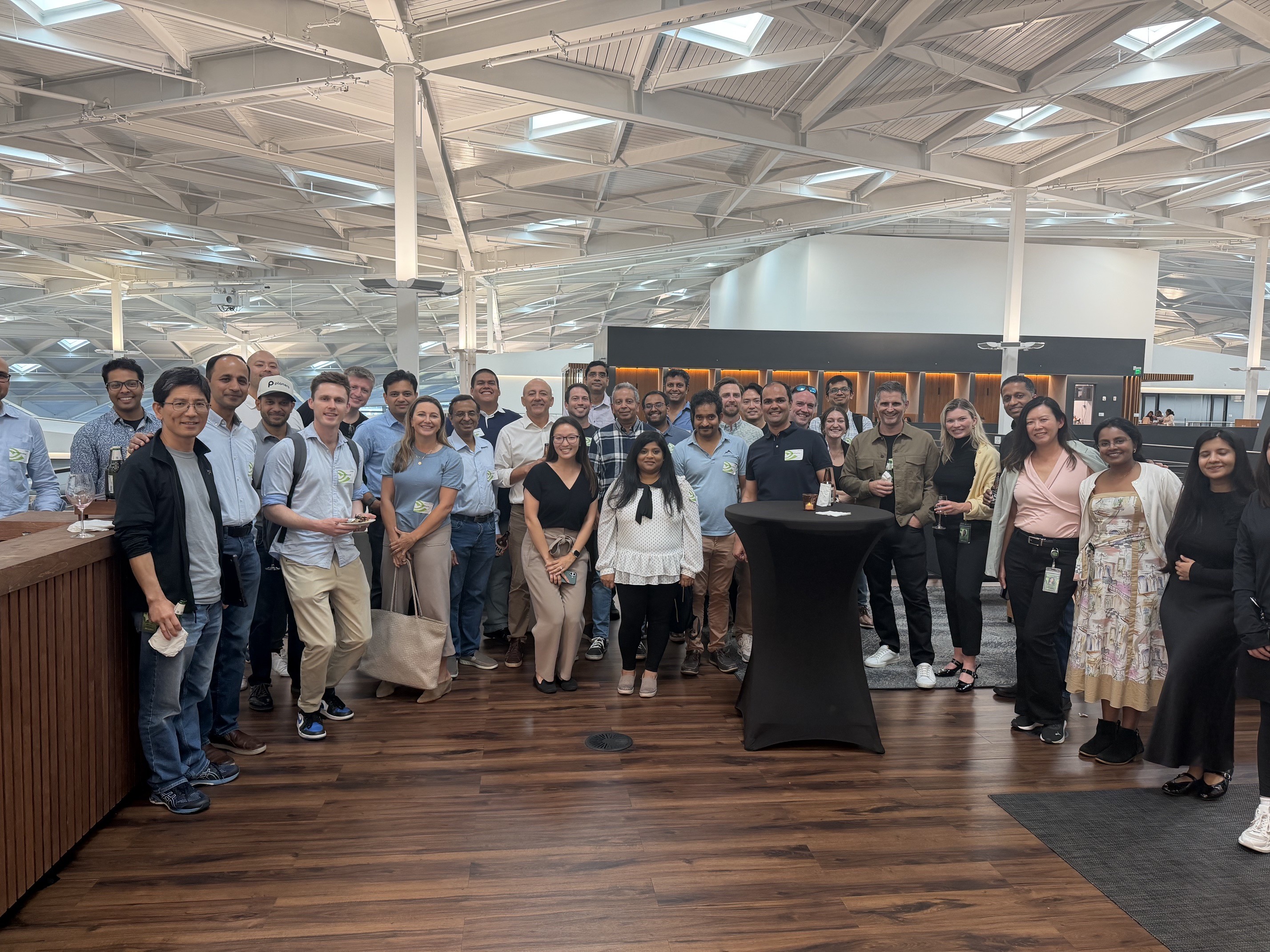
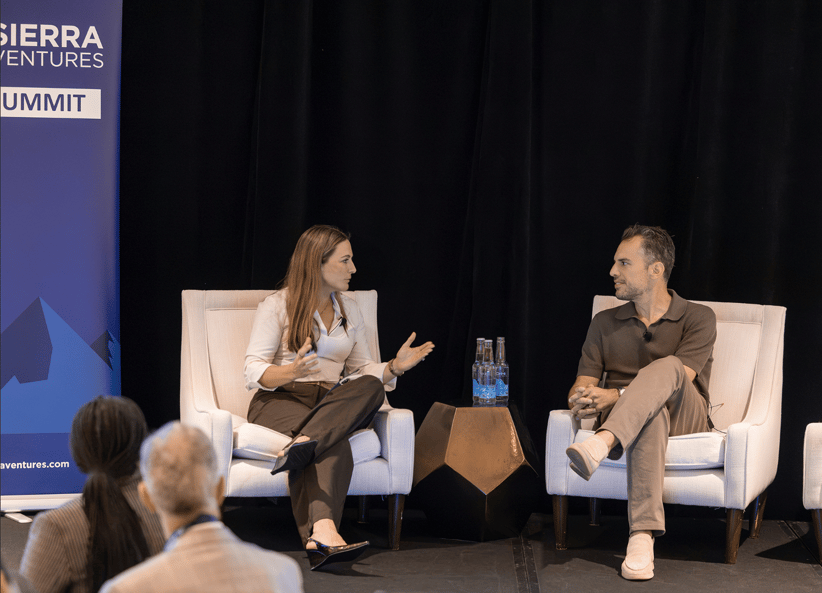
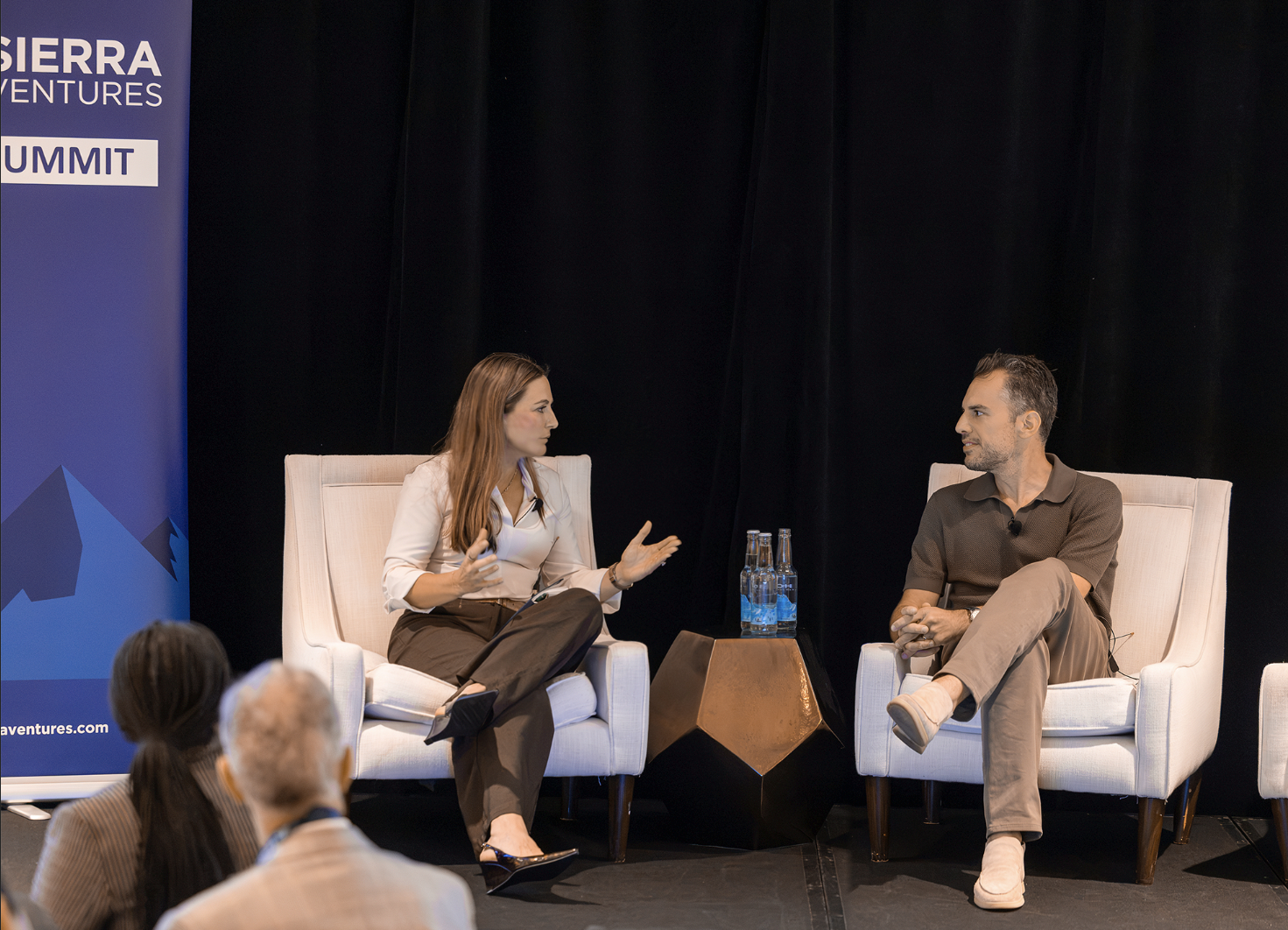
I sat down with Mike on stage at Sierra Ventures' 21st Annual CXO Summit in front of over 100 Fortune 1000 CXOs and Sierra founders. One idea kept coming back: when the technology moves this fast, winning comes down to knowing which parts of your work will still matter after the next model ships.
Anthropic Labs Builds for Models That Aren't Ready Yet
Labs gives a small group room to think months ahead while Anthropic's product teams stay focused on reliability and enterprise needs.
That's where Claude Code came from. Boris Cherny, a fellow Instagram alum, joined Labs wanting to use Claude to review code. Ben Mann, the Anthropic co-founder who got Labs off the ground, pushed him further. The models were going to keep improving, so why not have Claude write the code?
When a Labs project works, the people who built it move with it into the product org. Mike was blunt about how innovation teams usually fail: some become a "retirement community" for burned-out engineers, and others build ideas that die as soon as they're handed off. Moving the team along with the product avoids both.
Months of Engineering, Beaten by a Model Out of the Box
Nothing has changed Mike's thinking this year more than how fast the models improve. He keeps getting humbled by it.
In March, his team built a project called Hatch. It used a builder agent and a group of verifier agents to turn a simple request into a finished app. It worked, but it took weeks of careful prompting and engineering. Shortly before the summit, Mike ran the same projects on a newer model with none of that scaffolding. The model beat what his team had spent months building.
The lesson: "You can't hold your product shapes too strongly. You have to hold them lightly because they may just go away over time."
Building around today's model limits can create real value. Just know the advantage is temporary. If your whole value prop is making up for something the model can't do yet, the next release might erase it.
So what is Labs building for next? Earlier this year, Claude working autonomously for hours was the exception. Now it's common. The next leap is judgment. An agent can already watch your email or Slack, but it still flags things you've already handled or requests that aren't urgent. Think of the air quality monitor in Mike's house. Nine times out of ten, it goes off because someone is cooking and forgot to turn on the hood.
A truly useful system would learn that, and it would speak up only when something unusual kept happening. Knowing what deserves your attention comes down to judgment and taste, and the models still have ground to cover.
The Most Secure Agent Is the One That Does Nothing
Software is shipping faster than any human can review it. Anthropic uses agents to review much of its own code. That makes clear boundaries around agents essential.
Locking everything down doesn't work either. An agent that does nothing is perfectly secure and perfectly useless. The next most secure one asks permission for everything, so people start clicking yes without reading. Anthropic's answer was a classifier that handles routine decisions and only brings in a human when the risk calls for it.
For enterprises, the move is to figure out what your teams will need to capture value, then enable it safely. Companies that lock everything down risk getting outcompeted. With agents starting to transact on behalf of employees and companies, getting the approval flows right matters more than ever.
Time and Focus Remain Our Most Valuable Assets
Before Instagram, Mike and Kevin Systrom were building Burbn, and it wasn't taking off. They spent months adding features, convinced they were the exception to every case study that says you can't out-feature your way to success. Subtraction is what finally worked. They cut the product down to the one thing people loved, and that became Instagram.
That lesson matters even more for anyone building on AI today. Trying new features has never been cheaper. What used to take months can now take hours, and that freedom to experiment is a real advantage. But you can't keep everything you try. Every extra feature makes it harder to see what the product is for, and it pulls attention away from the core. As Mike put it, "More very rarely is the thing that tips."
Knowing when to walk away matters just as much. Years later, Mike and Kevin founded Artifact, a news aggregator that built a cult following. I was one of its power users. But it never grew like a breakout product, and in early 2024 they shut it down. As Mike has said, it was 10 units of input for one unit of output. We have to judge the opportunity cost of sticking with something that is good when there are opportunities to build something monumental.
When more is just a prompt away, focus is the advantage. The real skill is deciding what to keep, what to kill, and where to spend your time. Inside Labs, every product faces the same test at every stage: Is it catching fire? Are people changing how they work because of it? Would they miss it if it disappeared? If not, the answer isn't to build more. It's to let it go.
Your Most Valuable Skill Has a Shelf Life
Mike used to pride himself on writing great code. That's not where he sees his value anymore. Some of it is still in system architecture, but most of it now comes down to taste: deciding what's worth working on at all.
On a Labs project the week of the summit, he didn't have to write any code for the first 48 hours. Claude could have built the whole thing in a day. The real work was answering the questions that came first. What are we building? Who are we building it for? What are the tradeoffs?
Mike sees his own shift as a preview of what's coming for a lot of people. Most of us will have to redefine where our value comes from, probably more than once. He hopes people embrace that instead of concluding there's nothing left for them to do.
The question gets even bigger for the next generation. We both have young kids, and his school had talked about introducing AI at age seven. Mike isn't in the "introduce it as early as possible" camp, and he isn't in the "ban it until they're 30" camp either. In the right hands, AI can personalize learning in useful ways. At home, when his kids want to ask the smart speaker a question, he asks them first: What's your guess? How could we figure it out? He's trying to protect their curiosity and drive.
Will their jobs look like ours? Definitely not. Mike pointed to Iain M. Banks' Culture novels, which imagine a world long past AGI and past scarcity, where people still find plenty worth doing. He expects the same for our kids. People will still want to innovate, create, and connect with each other.
The AI Divide Is Widening, and We Don’t Have the Fix Yet
Even Mike has questions about AI he can't answer yet. The biggest one is the gap between what the models can do and how most people use them. Inside Anthropic, teams run long, autonomous workflows. Plenty of people outside it still mostly use AI to write emails. And that gap is getting bigger.
For the enterprise leaders in our room, the takeaway is simple. Two companies can have the same frontier models and get very different results. What separates them is how quickly their teams learn to use them well.
Written By