.png?width=298&height=78&name=sierra-logo%20(1).png)
![SIERRA-Logo [Navy]](https://www.sierraventures.com/hubfs/SIERRA-Logo%20%5BNavy%5D.svg)


Written by
Anne Gherini
Published on
October 7, 2026
Share


Summary

The browser is becoming the primary interface for knowledge work, shifting AI from search to an active work companion.
In an AI-rich world, the ability to ask good questions and earn trust matters more than generating outputs.
Real AI adoption is cultural, not technical, and comes from changing how teams work, not just what tools they buy.
Share


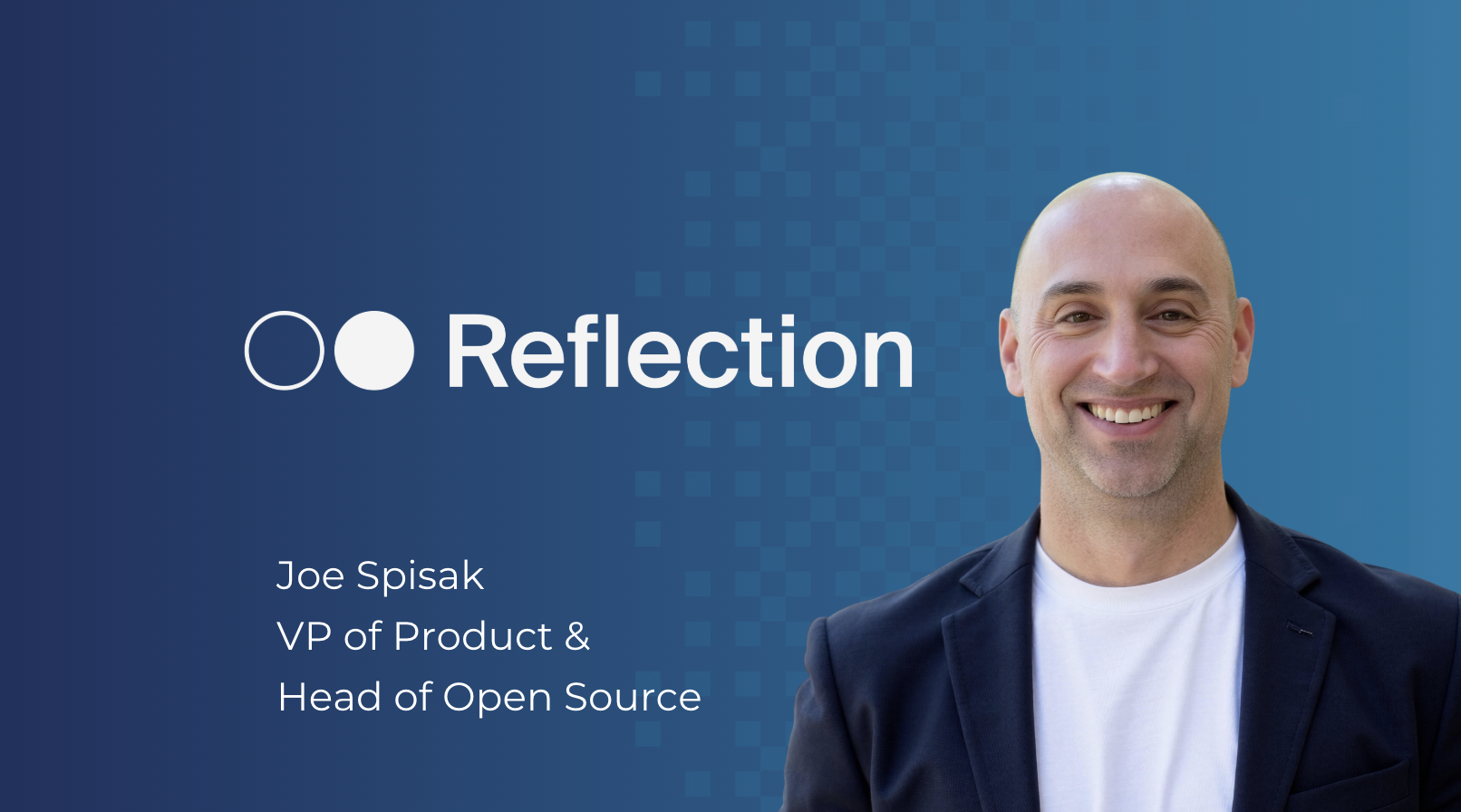
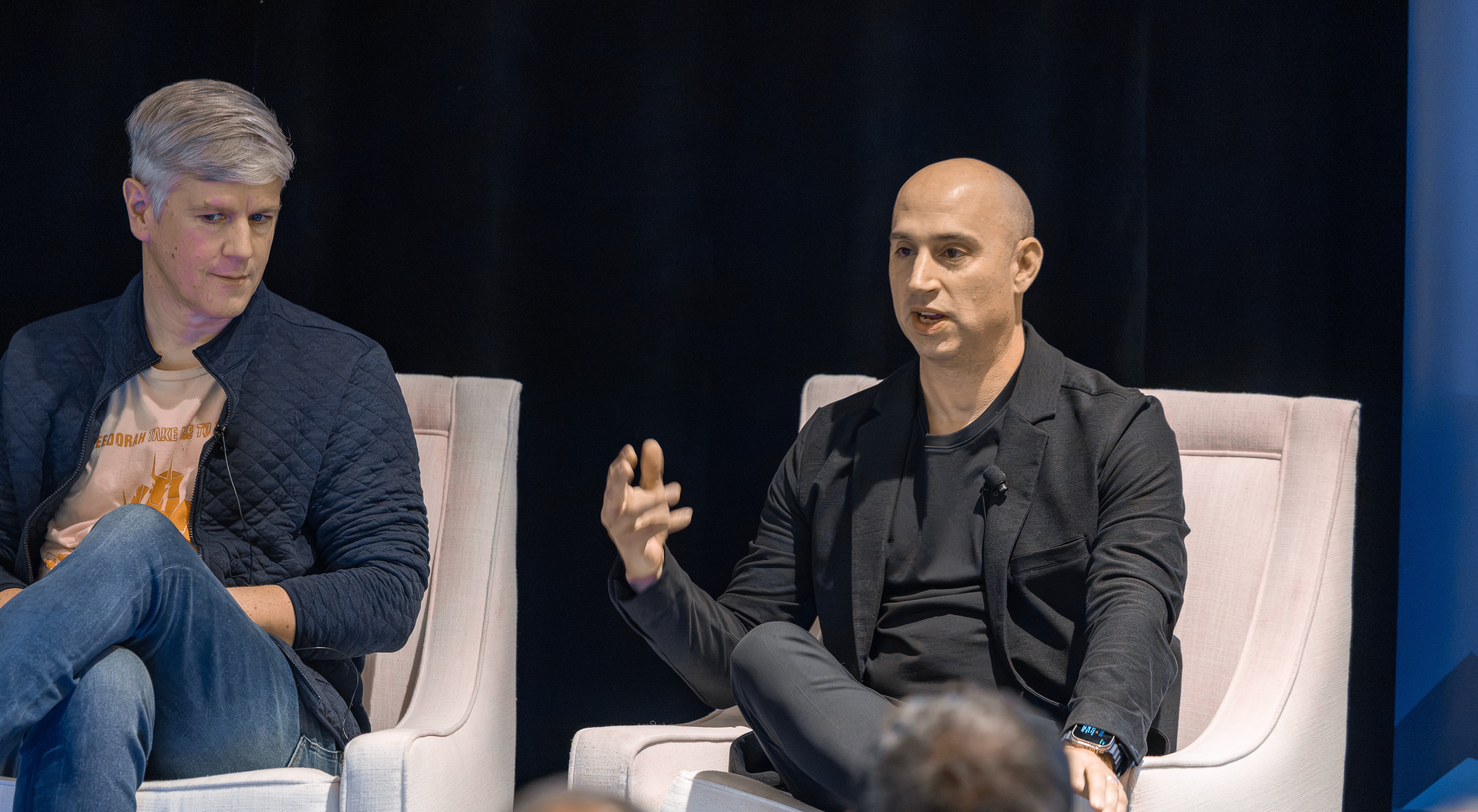
At Sierra Ventures' 21st Annual CXO Summit, Joe Spisak, VP of Product & Head of Open Source at Sierra Ventures portfolio Reflection AI, joined Charles Zedlewski, Chief Product Officer at Together AI, for "The Rise of Open Models: The Next Chapter in AI."
Joe, who came to Reflection AI from Meta, argued that open models have outgrown the "cheaper alternative" label. His message to a room of enterprise leaders: the companies that own their models, their harnesses, and the knowledge flowing through them will build a moat. The ones that rent all of it will give that knowledge away.
You're Choosing a System, Not a Model
Enterprise demand for open models has picked up quickly. Long-horizon agents gave organizations an accessible way to put AI to work, and open-weight models became good enough to power them.
Joe said the biggest change over the past year is what buyers are actually evaluating. Benchmark scores still get the headlines. In production, though, the harness, the runtime, and observability across multi-agent systems decide how a model performs. Choosing a model now means choosing the system and ecosystem around it.
Reinforcement Learning Is the Hard Part
Setting compute aside, Joe named the real bottleneck in building frontier models: stable reinforcement learning (RL) at scale. Pre-training is relatively well understood. Getting RL to run reliably across millions of environments, with rewards stable enough that a model keeps learning, is not. Runs fail often, and progress depends heavily on hard-won experience.
That is also why he doesn't think AI is ready to build the next generation of models on its own.
"RL sounds very easy. But to get stable rewards and have your model continue to learn is really hard. It's definitely more of an art than a science."
Where AI Is Already Improving AI
AI can't yet build a better model unassisted, but Joe said it is already improving the infrastructure underneath. His team worked on the Triton kernel language while at Meta, and they have seen AI-generated GPU kernels push performance steadily toward the limits of the hardware.
The opportunity is large because so much compute goes unused. Joe said training utilization at many labs sits below 30 percent. Labs are now using every resource they can to close that gap, including CPUs for running RL environments, alternative hardware, and lower-precision math.
Open Isn't Just Copying
Joe pushed back on the idea that open models only catch up by distilling closed ones. Distillation happens, he said, but it puts a ceiling on how far a model can go. The faster progress comes from real research.
He pointed to DeepSeek's paper as an example. Most readers fixated on its low training cost. Joe went straight to the RL curve, which showed results continuing to improve as more compute was applied. That insight helps explain the fast pace of open releases since then.
He was also candid about the paradox of open source. A model is hard to monetize directly, so it is at once a commodity and a key asset: something a company has to own and release openly, while the value is captured in everything built around it.
The Enterprise Case: Own Your Intelligence
For enterprise leaders, Joe framed open models as a strategic question more than a cost question. Every day, thousands of employees interact with internal agents, and those interactions become the company's tribal knowledge. If all of that runs through someone else's model, the knowledge leaves the building.
"If you don't deploy your own intelligence, you're giving away your intelligence. You're not going to build a moat as an organization."
He also gave a reality check: open source is not free. Owning the stack means paying people to maintain infrastructure. With a closed API, that infrastructure cost is still there, just built into the token price.
AGI Will Arrive Unevenly
Asked for an AGI date, Joe said it depends on the domain. Coding may already be at or near that bar. Anything that touches the physical world, from robotics to AI for biology and chemistry, is likely years away, held back by scarce data and the need for deep domain expertise.
"We're here for some stuff, but definitely far away from others."
Written By