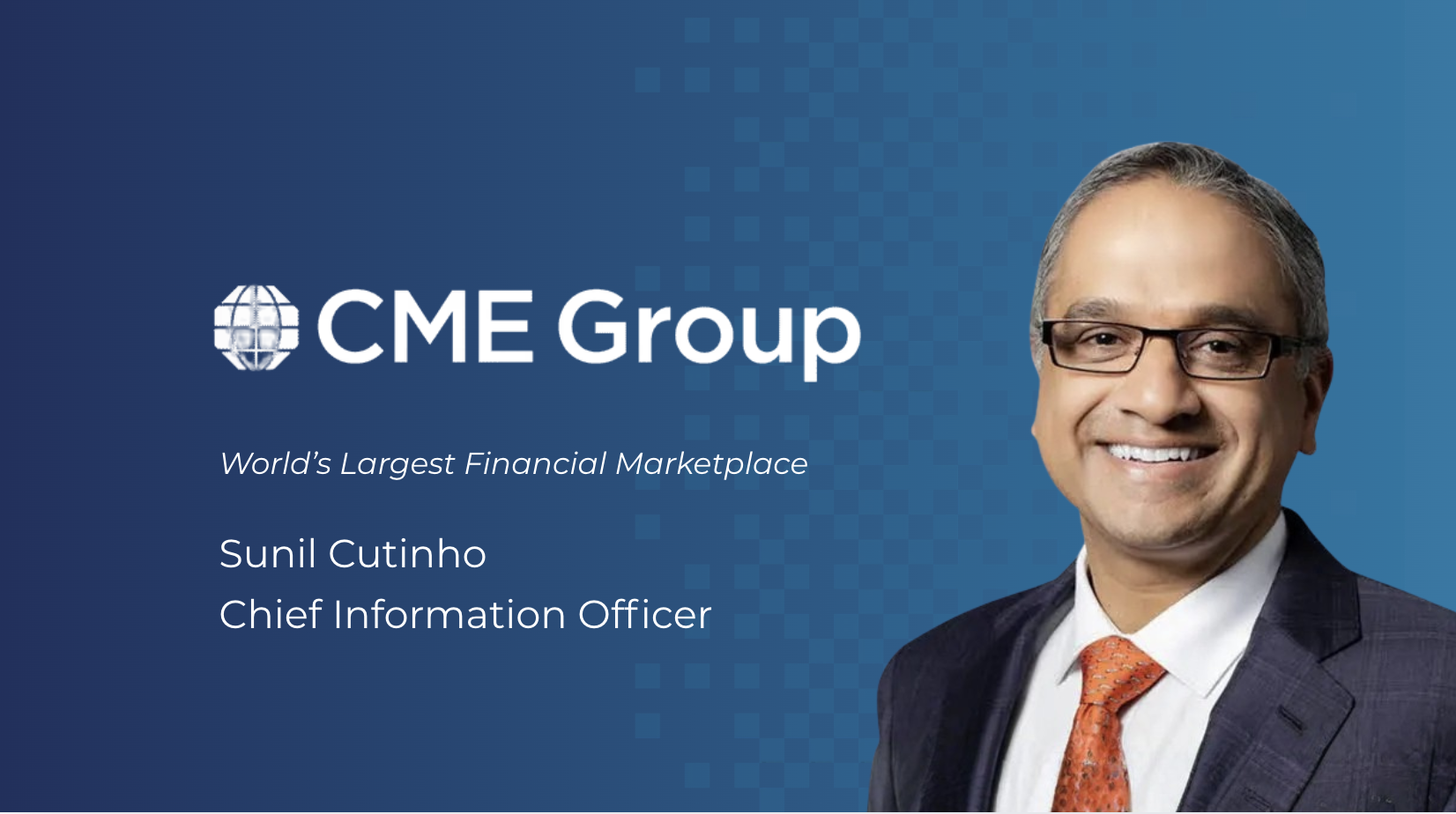
At Sierra Ventures, conversations with enterprise technology leaders help us understand how AI is moving into production inside complex organizations. I recently spoke with Sunil Cutinho, CIO of CME Group, the world’s largest derivatives marketplace, where investors, institutions, and governments manage risk across interest rates, commodities, equities, and currencies.
Sunil’s message was clear. Start with productivity gains, invest early in your data foundation, and expand adoption only after proving impact.
Engineering productivity is the first real win
One of the most immediate areas of impact at CME Group is inside the software development lifecycle. AI is helping teams translate early ideas into structured requirements before coding even begins.
As Sunil explained, “what is expressed in a vision or sometimes in a one-sentence epic, it can take that and write a very detailed requirements document, a story, or a feature. And that’s taking us almost 80 to 90 percent of the way.”
This mirrors what we continue to hear across enterprise environments. Engineering workflows are often the fastest place to generate measurable value from AI.
Customer-facing agents are entering learning environments first
CME Group is also introducing agents inside its trading simulator platform, where students and new traders learn how markets operate. These agents guide users through trading workflows while reinforcing compliance expectations.
Sunil described the goal as helping users learn the markets while “learning to trade without violating any of the laws or the rules that are out there.”
This staged rollout approach reflects how many regulated enterprises are safely introducing AI.
Leadership alignment matters more than tooling
One of the strongest signals from the conversation was that AI transformation starts with clarity at the leadership level, not with infrastructure decisions.
As Sunil put it, “the hardest part is clarity of thought from the top.”
Organizations that begin with shared outcomes and then redesign processes around them tend to move faster and with fewer false starts.
Data foundations determine how far AI can scale
If he were rebuilding the enterprise stack today, Sunil would start with a unified data layer that supports both operational and analytical workflows.
He explained that organizations should prioritize “a single data foundation where you can seamlessly go from an operational data store to an analytical data store without moving data.”
Across enterprises, this remains one of the clearest prerequisites for successful agent-driven systems.
Build where you differentiate and partner where you do not
CME Group’s approach to build versus buy is straightforward. Capabilities that create competitive advantage are built internally. Everything else is evaluated through partnerships that can operate inside secure enterprise environments.
For startups working with regulated enterprises, this remains one of the most important adoption signals to understand.
.png?width=298&height=78&name=sierra-logo%20(1).png)
![SIERRA-Logo [Navy]](https://www.sierraventures.com/hubfs/SIERRA-Logo%20%5BNavy%5D.svg)




%20(1).jpeg)