At Sierra Ventures, conversations with enterprise technology leaders help us understand how AI is being deployed inside large organizations where reliability, governance, and human impact matter as much as innovation.
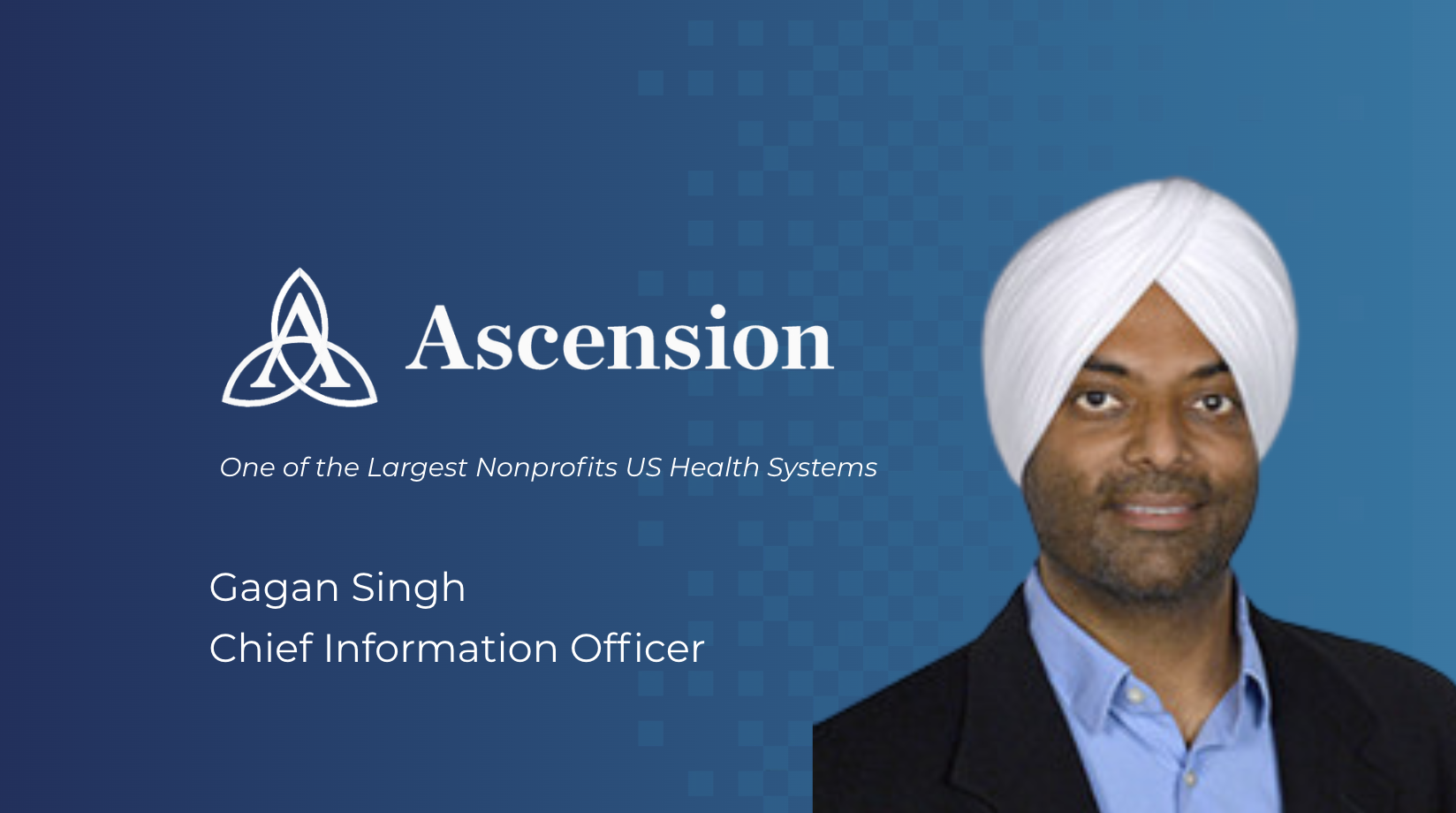
Mark Fernandes recently sat down with Gagan Singh, Chief Information Officer at Ascension, one of the largest nonprofit health systems in the United States, to discuss how healthcare organizations are approaching AI adoption, where they are seeing measurable value today, and what startups often misunderstand about selling into the enterprise.
The Hardest Part of AI Is Organizational Change
One of the clearest themes from the conversation was that AI adoption is not primarily a technology challenge.
According to Gagan, healthcare organizations have moved beyond experimentation. The focus today is on identifying where AI can create measurable value while maintaining trust, privacy, governance, and patient safety.
As he put it:
"The biggest challenge is not the AI tools. There have been plenty of tools. The challenge is creating the conditions where these tools can be adopted safely and at scale."
While technology continues to improve rapidly, healthcare organizations must bring people along, build AI fluency, and establish the guardrails necessary for responsible adoption.
AI Creates Value by Reducing Friction
Rather than pursuing AI for its own sake, Ascension is focused on removing friction from clinical and operational workflows.
One example is physician documentation. Ambient AI tools are helping reduce administrative burden and giving clinicians more time back in their day.
Ascension is also using AI-powered prediction models to improve discharge planning, helping accelerate care coordination, patient throughput, and operational efficiency.
Gagan believes leaders should separate AI's potential from its inevitability. The near-term opportunity is not an enterprise-wide transformation overnight, but reducing friction across the organization and giving caregivers more time to focus on patients.
What Startups Should Know About Healthcare AI
When asked what advice he would give founders, Gagan's answer was straightforward:
"Do not lead with AI. Lead with the problem."
Healthcare organizations are not short on AI demos. What stands out are companies that can clearly articulate the friction they remove and the business problem they solve.
He encouraged startups to think beyond individual workflow automation and focus on broader challenges that span the healthcare ecosystem, whether that's care coordination, patient navigation, prior authorization, or operational efficiency.
The companies that win won't simply automate a task. They'll remove friction across the system.
For enterprise leaders, the message was equally clear: AI adoption starts with trust, scales through organizational change, and ultimately succeeds when it helps people do their jobs better.
Watch the video:
.png?width=298&height=78&name=sierra-logo%20(1).png)
![SIERRA-Logo [Navy]](https://www.sierraventures.com/hubfs/SIERRA-Logo%20%5BNavy%5D.svg)




%20(1).jpeg)